
Would you like to know how to unlock your best ideas with the power of mind mapping?
Table of Contents
Mind mapping is a popular way to graphically organize knowledge.
These diagrams can be simple or complex, and you can use commercial software or create your own drawings.
In any case, they help you turn your brilliant ideas into actionable steps.
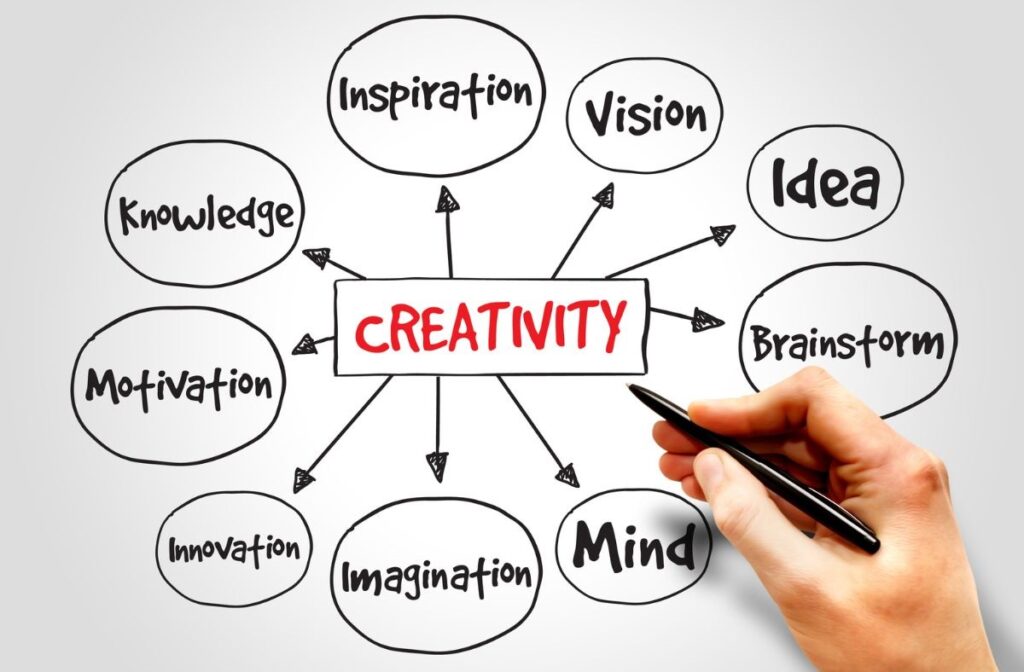
Benefits of Mind Mapping
1. Increase your creativity. Mind mapping encourages creative thinking.
Forget about editing for a time and focus on getting all of your ideas down on paper.
2. Encourage collaboration. Use mapping as a solo or group exercise.
Communicating information visually helps other team members understand the message and improves group memory.
3. Increase productivity. You’ll like being able to automate routine tasks.
Being more organized will provide you with more time for intriguing new tasks.
4. Become more effective. Mind mapping’s dynamic nature makes it excellent for achieving successful results.
Structuring and debating material increases engagement compared to passive reading.
How to Get Started with Mind Mapping
1. Establish a key theme. Try to convey your primary point in three words or less. Make it the central image in your diagram.
2. List all pertinent subtopics. Think about everything linked to your main idea. You will add subtopics as branches by drawing more lines and shapes from the center.
3. Organize themes into groups and linkages. Now you can start thinking about groupings and how they relate to one another. This will advise how to arrange and connect certain parts.
4. Provide links to supporting information. To make your map easier to understand, include links to external sites. For example, an organizational chart may include staff bios, and a meeting record could include links to past session minutes.
5. Assign homework. Prepare for action. Create challenging assignments. For team activities, assign specified responsibilities to each participant and set a deadline.
6. Review and evaluate. Look for methods to improve your mind maps as you utilize them. You might wish to make your labels more concise or change your color palettes.
7. Add text. Even though this is a visual activity, words play an important part. Create a legend to explain frequently used symbols. Use callouts for items that require additional information.
8. Develop templates. Over time, you may see that you employ similar forms repeatedly. Save your preferred templates to make the process faster in the future.
How to Apply Mind Mapping
 1. Advance your career. Most people first learn about mapping at work. It works well for a variety of tasks, including meetings and project management.
Give your daily to-do list a fresh look, or work your way up to creating an amazing visual display for your next performance assessment.
2. Take significant decisions. You can apply this visualization to different aspects of your life.
When presented with a difficult decision, sketch up all of the advantages and negatives, as well as the views of the various actors.
3. Record your thoughts. Some of your most significant ideas are likely to come to you unexpectedly.
Experiment with free apps for creating maps on your phone.
4. Process vast amounts of data. Given the information deluge associated with modern life, it’s simple to see why mapping is growing more popular.
Mind mapping is a basic method for dealing with large amounts of information in a short period of time and identifying connections between them.
Improve Your Life with Mind Mapping
Mind mapping has the ability to benefit both your personal and professional lives.
It improves planning, consolidates vital information, and generates valuable insights.
Have fun drawing your way to a better future.
Don’t know where to start when it comes to a mind map? Here is a PDF of a Mind Map for you to use!